


By Emma Whitehead on Thu 18 December 2025 in Insights
Smart ventilation in schools
Air quality in schools has a direct impact on the health, wellbeing, and learning outcomes of pupils. Yet, many classrooms across the UK continue to rely on outdated or insufficient ventilation systems, limiting airflow and contributing to elevated levels of CO2 and other indoor pollutants.
This can affect concentration, cognitive performance, and long-term respiratory health, particularly in older buildings or spaces without modern air management technology.
This report examines the current state of school ventilation across the UK, drawing on a survey of over 500 schools. It explores the link between indoor air quality and learning, the limitations of traditional cooling systems, and how smart ventilation technology can support healthier, more productive classrooms.
Key Findings
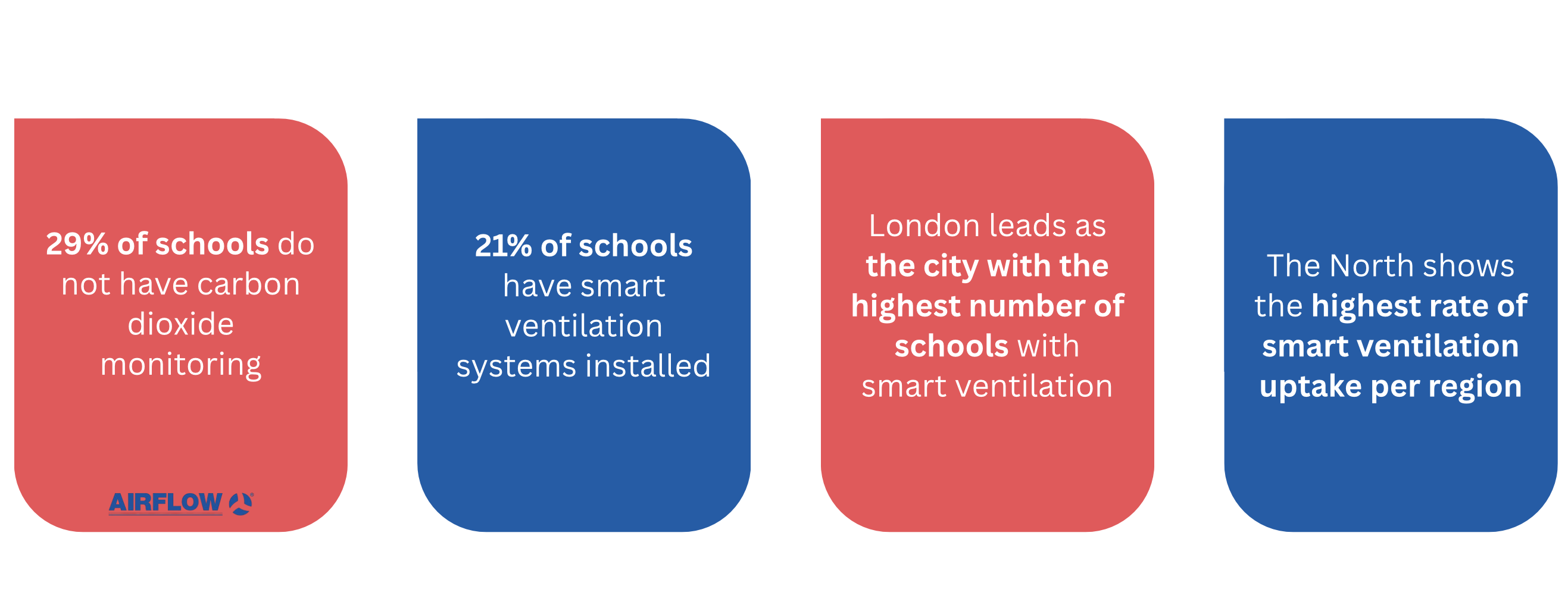
- 29% of schools do not have carbon dioxide monitoring
- 21% of schools have smart ventilation systems installed
- London leads as the city with the highest number of schools with smart ventilation
- The North shows the highest rate of smart ventilation uptake per region
The issue at hand
Despite concerns raised by the ventilation industry, air quality in classrooms remains a largely undiscussed issue. As modern buildings have improved energy-efficiency and air tightness, the natural exchange of fresh air has decreased, leading to higher levels of carbon dioxide (CO2) and accumulation of pollutants indoors.
High CO2 levels are not immediately noticeable, but their impact on pupils and teachers is substantial. In classrooms with poor ventilation, CO2 can accumulate throughout the day, leading to:
- Tiredness and sluggishness
- Difficulty concentrating
- Headaches and reduced alertness
- Lower overall cognitive performance
With students and teachers spending the majority of their working day indoors, school users can be exposed to increased levels of CO2 in turn having detrimental health and learning impacts.
29% of schools do not have carbon dioxide monitoring
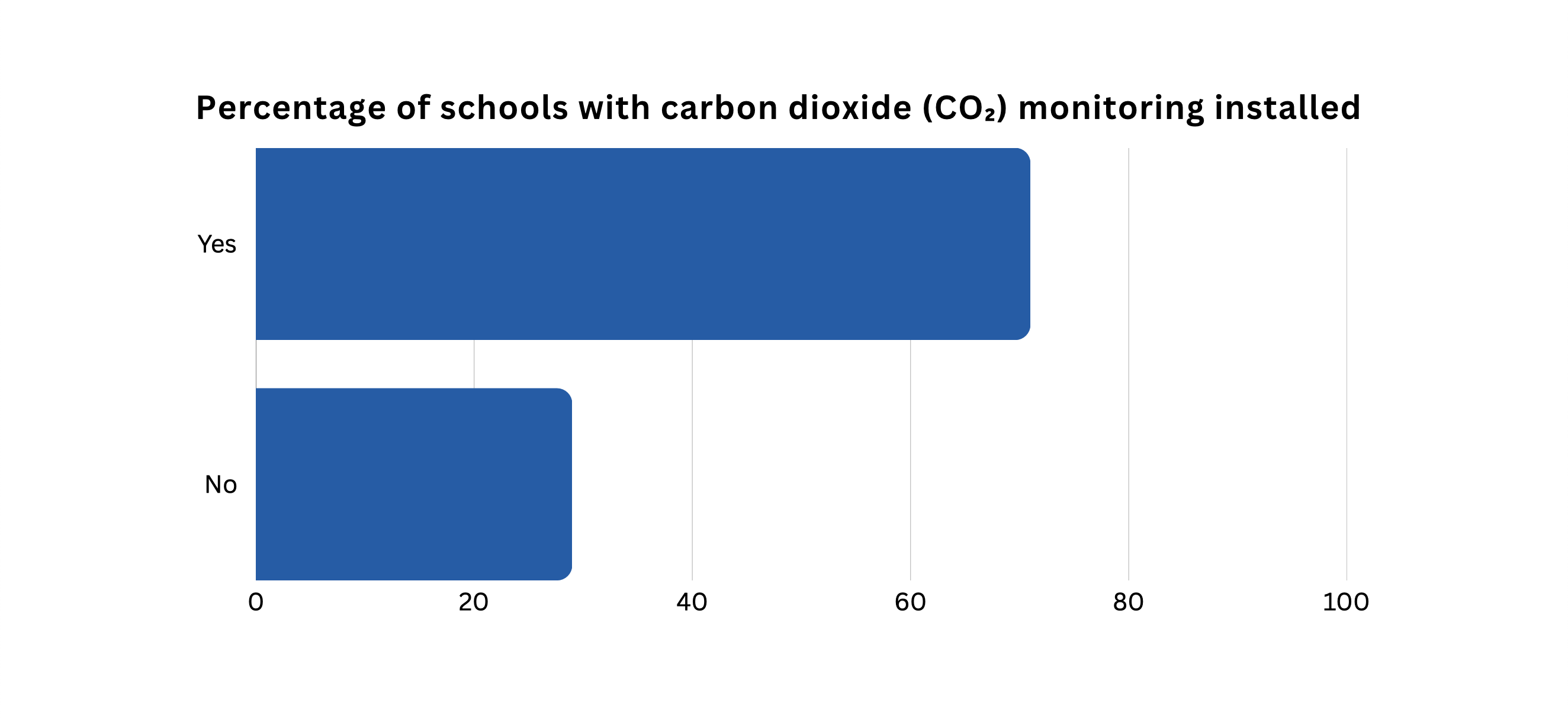
Research has established a clear link between elevated CO2 levels and reduced cognitive performance. High concentrations of CO2 in indoor spaces can impair memory, decision-making, and attention span, to the detriment of a healthy effective learning environment.
For schools seeking to systematically improve academic outcomes, indoor air quality cannot be ignored. Healthy air boots students’ focus, reduces tiredness and improves both teaching and learning experiences.
Schools are advised to install CO2 monitoring systems, in order to identify areas of CO2 build-up and enact appropriate counter measures.
Just 21% of schools have smart ventilation systems installed
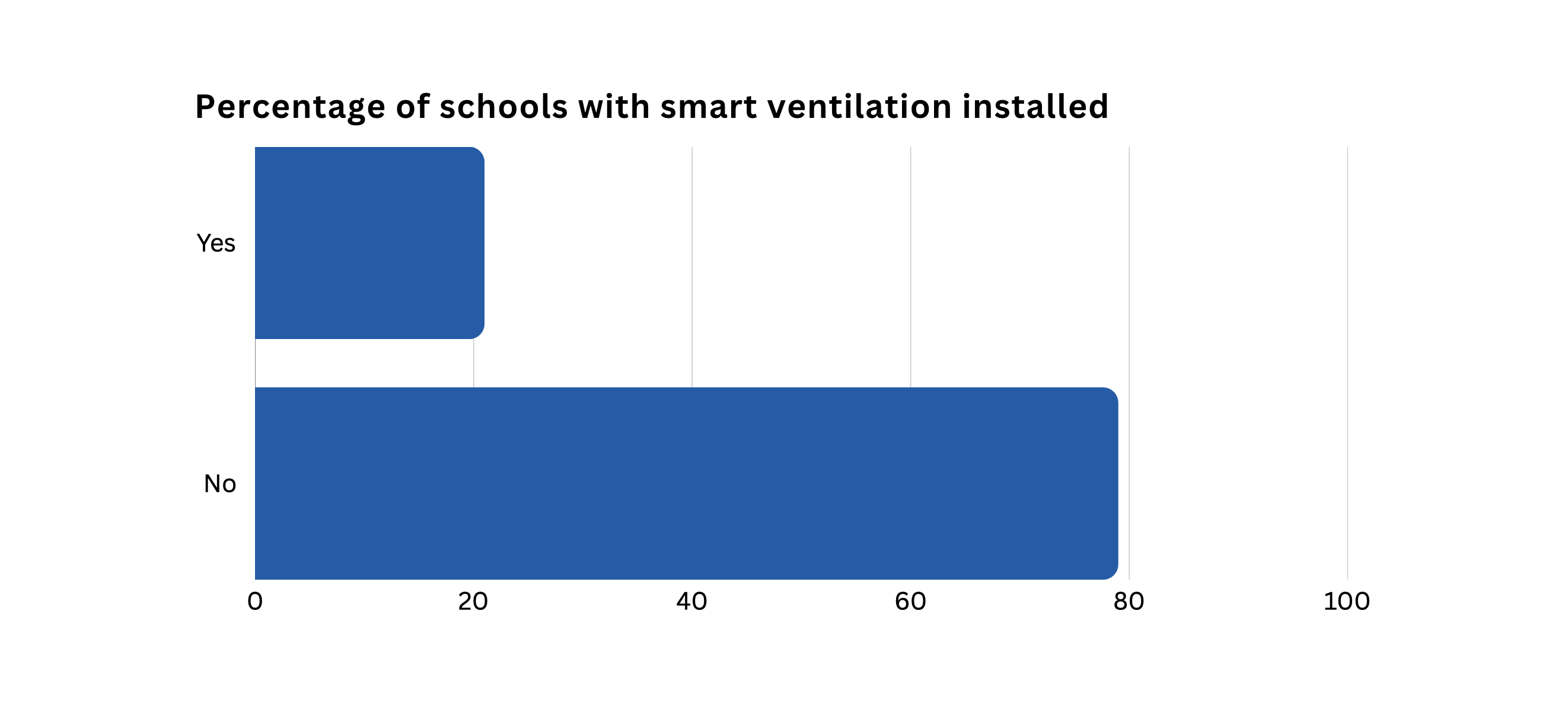
While ventilating rooms through opening windows can sometimes be sufficient in well-ventilated spaces, schools may require investment in smart ventilation systems to tackle the issue head on.
Manual ventilation can be inconsistent in its effectiveness, often impractical due to weather, noise, or outside pollution. Smart ventilation provides a more reliable, controlled, and energy-efficient approach.
Smart ventilation systems automatically adjust airflow based on real-time data, responding to CO2 levels, occupancy, and temperature to maintain a healthy indoor environment while reducing energy waste.
Core Features and Benefits
- Real-time air quality monitoring – tracks CO2 humidity, and temperature
- Automated control – adapts ventilation rates based on occupancy
- Remote system management – enables facilities teams to manage air quality across multiple classrooms or entire campuses
- Energy efficiency – adjusts energy usage in real time, along with capturing and reusing heat from outgoing air, reducing waste and lowering overall consumption.
Systems such as Airflow’s Susurro range delivers continuous fresh air while recovering heat from outgoing air in winter and bypassing the exchanger in summer. The range is also BB93 and BB101 compliant, offering low-noise solutions along with the latest in cross-counter-flow heat exchanger technology. This system ensures comfort and efficiency year-round, creating a healthier, more sustainable environment for pupils and staff alike.
The North leads in smart ventilation uptake
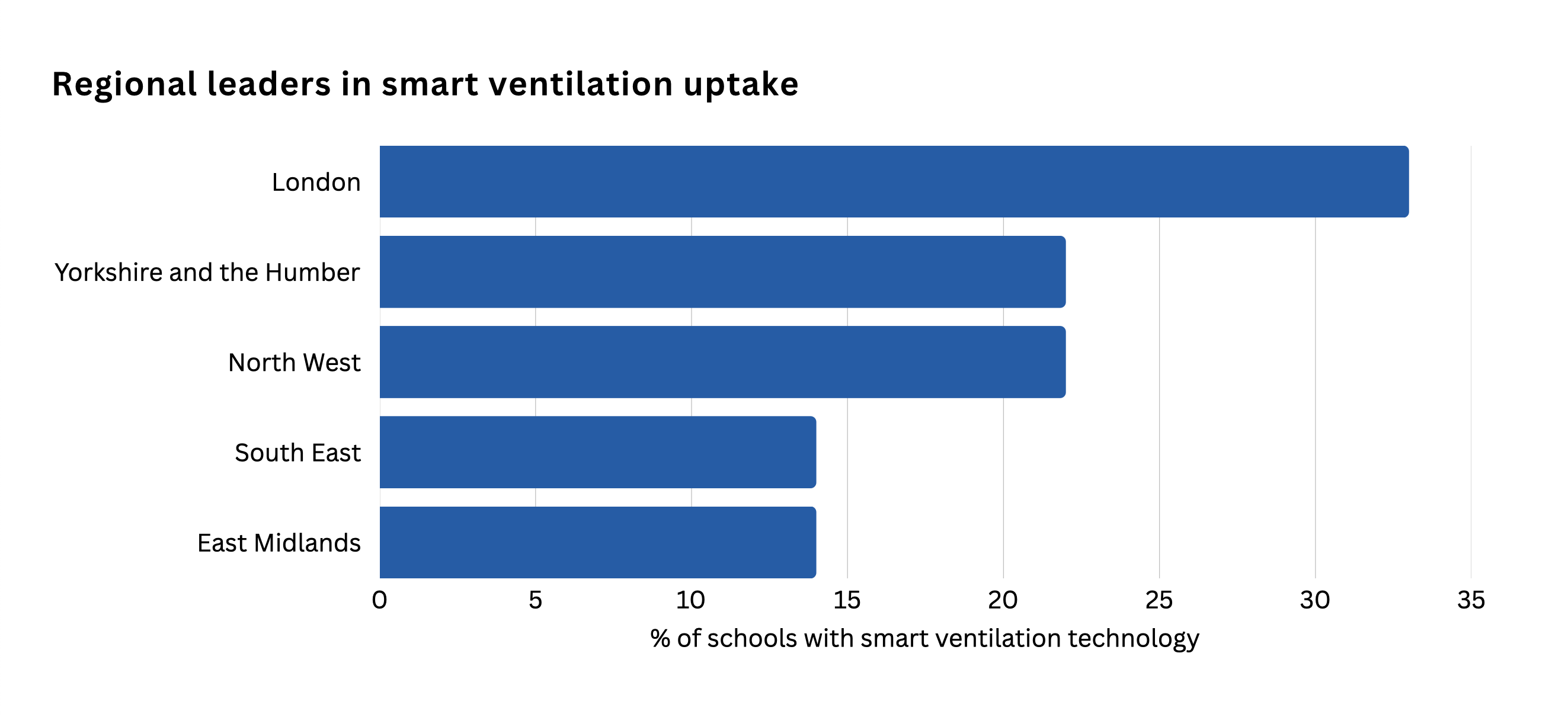
Survey data indicates that the North leads in the uptake of smart ventilation, with just under half (44%) of schools with such systems located in northern regions, equally split between the North West and Yorkshire and the Humber (22% each).
London accounts for a third (33%) of schools with smart ventilation adoption, while the East Midlands and South East each represent 11%.
In terms of CO2 monitoring, London holds the largest share at 23.3%, followed by the North West, South West, and East of England at 13.3% each, with the East Midlands trailing at 6.7%. Overall, southern regions collectively account for around 60% of schools with CO2 monitoring, compared with 23% in the North and 17% in the Midlands.
Academies represent the largest share of schools with smart ventilation
44% of schools with smart ventilation are academies, 33% are local authority maintained, and 22% are supported by multi-academy trusts. In terms of school type, 44% are primary schools, 33% are secondary, and 22% are all-through schools.
Barriers to implementation
Schools report several challenges in ventilating classrooms and implementing smart ventilation.
Many rely on natural ventilation, but older buildings often have high, limited, or ineffective windows, making it difficult to provide adequate fresh air in fully occupied rooms.
Respondents also highlighted struggles with maintaining low CO2 levels, particularly in the afternoons, even with monitoring and temporary use of air purifiers.
Older schools frequently lack modern ventilation technology or building management systems, and available funding often does not cover additional improvements.
Seasonal factors, such as summer heat in unairconditioned buildings, and operational constraints like closed external doors for safeguarding, further restrict airflow. Routine maintenance, such as changing filters, was also noted, while a few respondents from smaller schools reported minimal issues due to good access to windows and doors.
Why air conditioning alone is not enough
While air conditioning systems are becoming increasingly commonplace in schools as average annual temperatures rise, they do not address air quality.
Air conditioning primarily recirculates existing indoor air, it cools, but does not clean. Without proper ventilation, CO2 and airborne pollutants remain trapped inside.
This distinction is key: temperature control ensures comfort, while ventilation ensures performance.
To create environments where pupils can thrive, both must be considered together.
Smart ventilation: A long-term solution
Despite these positive trends, the majority of schools remain without smart ventilation, and nearly one-third lack even basic carbon monoxide monitoring, highlighting a clear gap in air quality provision across UK education.
Air quality in schools is not just a facilities issue, it’s a public health and education priority. Clean, well-ventilated classrooms help pupils stay alert, support teacher wellbeing, and reduce absenteeism linked to poor air conditions.
Beyond health, smart ventilation aligns with national priorities for energy efficiency, carbon reduction, and building compliance. As legislative requirements tighten, schools that act early will future-proof their estates and create safer, healthier learning environments.
Regulations to consider for ventilation in educational buildings
Ventilation design in schools and colleges is guided by two key frameworks: Building Bulletin 101 (BB101) and Building Bulletin 93 (BB93).
BB101 sets minimum ventilation rates, CO2 limits, and overheating controls for educational buildings, while requiring good indoor air quality, thermal comfort, and acceptable acoustics. BB93 adds strict acoustic limits for learning spaces, meaning ventilation systems must minimise noise from fans and ducts. Because open windows frequently fail to meet these acoustic requirements, particularly in noisy locations, low-noise mechanical ventilation is generally recommended for classrooms and specialist spaces.
Recommendations
To ensure every school provides a healthy and productive learning environment, this report recommends:
1. Implement carbon monoxide monitoring in all classrooms to track and manage air quality.
2. Adopt smart ventilation systems in both new builds and retrofit projects, such as the purpose-built Susurro range; decentralised commercial MVHR units with integral carbon dioxide sensor and BB93 and BB101 compliant.
3. Incorporate ventilation into early design stages of school construction and refurbishment.
4. Educate facilities managers and decision-makers on the distinction between cooling and ventilation.
5. Prioritise air quality alongside temperature and energy efficiency in school health and safety policies.
The message is clear: ventilation is not a secondary concern, it is fundamental to creating safe, healthy, and effective learning spaces.
Smart ventilation offers schools a sustainable and future-ready solution that supports both wellbeing and academic performance. By prioritising air quality, schools can ensure every child and teacher breathes cleaner air, learns better, and thrives.
Methodology
This report is based on a survey of over 500 schools across the UK during August–September 2025. Responses were collected via FOI request, and subsequently analysed.
Regional analysis was conducted to identify adoption patterns of smart ventilation and carbon monoxide monitoring across England